
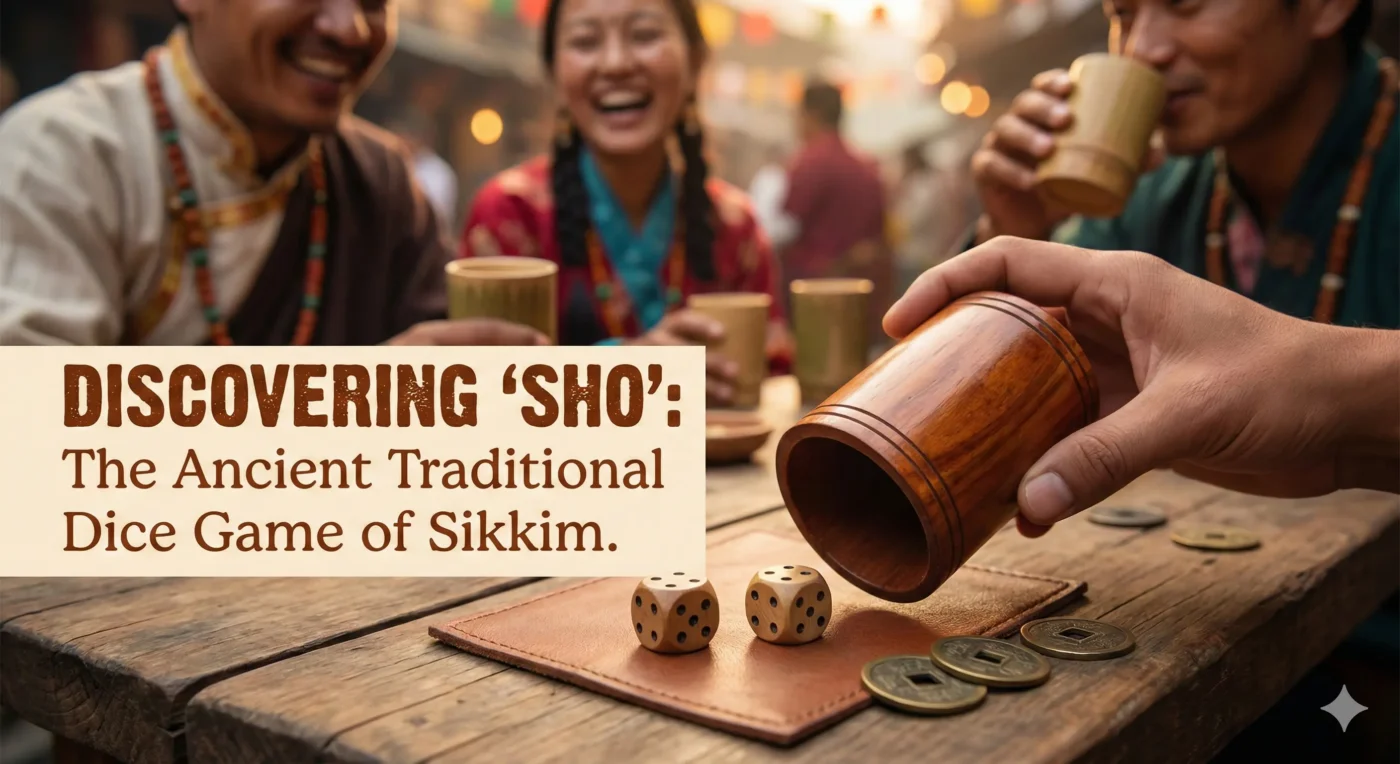
When most people search for “Sikkim Game” today, they are looking for modern mobile color prediction apps. However, the real heart of Sikkim’s gaming culture lies in its centuries-old traditions. Before smartphones existed, the people of the Himalayas gathered to play the authentic traditional game of sikkim known as Sho.
In this article, we take a break from the digital world to explore the history, rules, and cultural significance of Sho, the noisy and exciting dice game that defines Sikkimese social life.
What is the “Sho” Game?
The sho game of sikkim (also played in Bhutan and Tibet) is a traditional dice game played passionately by men in social gatherings. It is not just about luck; it is about camaraderie, shouting, and celebrating festivals.
The Components of the Game:
- The Dice Cup (Sho-shong): Usually made of polished wood or bamboo.
- The Dice (Sho): Two hexagonal wooden dice marked with dots (1 to 6). Formerly, cowrie shells were sometimes used.
- The Board/Pad: A leather or thick cloth pad where the dice are thrown to dampen the sound and keep them contained.
- Counters/Coins: Used to keep score.
How is Traditional Sho Played?
Unlike silent online games, Sho is incredibly loud. The excitement comes from the players shouting their desired numbers as they slam the dice cup down.
- The game is usually played by two teams of two or three players each.
- A player vigorously shakes the dice inside the wooden cup.
- With a loud shout (calling out the number they want), the player slams the cup upside down onto the leather pad.
- The cup is lifted to reveal the combination. Points are awarded based on the total, and counters are moved accordingly.
The atmosphere is electric, with teammates cheering and opponents groaning with every reveal of the dice.
Cultural Significance: When is it Played?
You won’t find Sho being played quietly in a corner. It is a centerpiece of major social events. It is most commonly played during:
- Losar (Tibetan New Year): Families gather, and long sessions of Sho are played while drinking local millet beer (Tongba).
- Weddings: To entertain guests and build bonds between families.
- Harvest Festivals: To celebrate a season of hard work.
Other Traditional Games vs. Modern Apps
Besides Sho, **Archery** is another major traditional sport in Sikkim. Recently, we have also seen searches for terms like sikkim road game. While “Road Games” might refer to casual modern mobile games involving traffic or racing, they have no connection to the rich cultural history of traditional Sikkimese games like Sho.
It is important to remember that while modern “Sikkim Game” apps are fun for a quick thrill, the true spirit of Sikkim’s gaming culture is found in the wooden dice and loud laughter of a traditional Sho match.
Interested in Modern Gaming?
While we respect tradition, we know you are here for the app. Visit our Homepage for the latest digital game download.
